Maoism by Julia Lovell
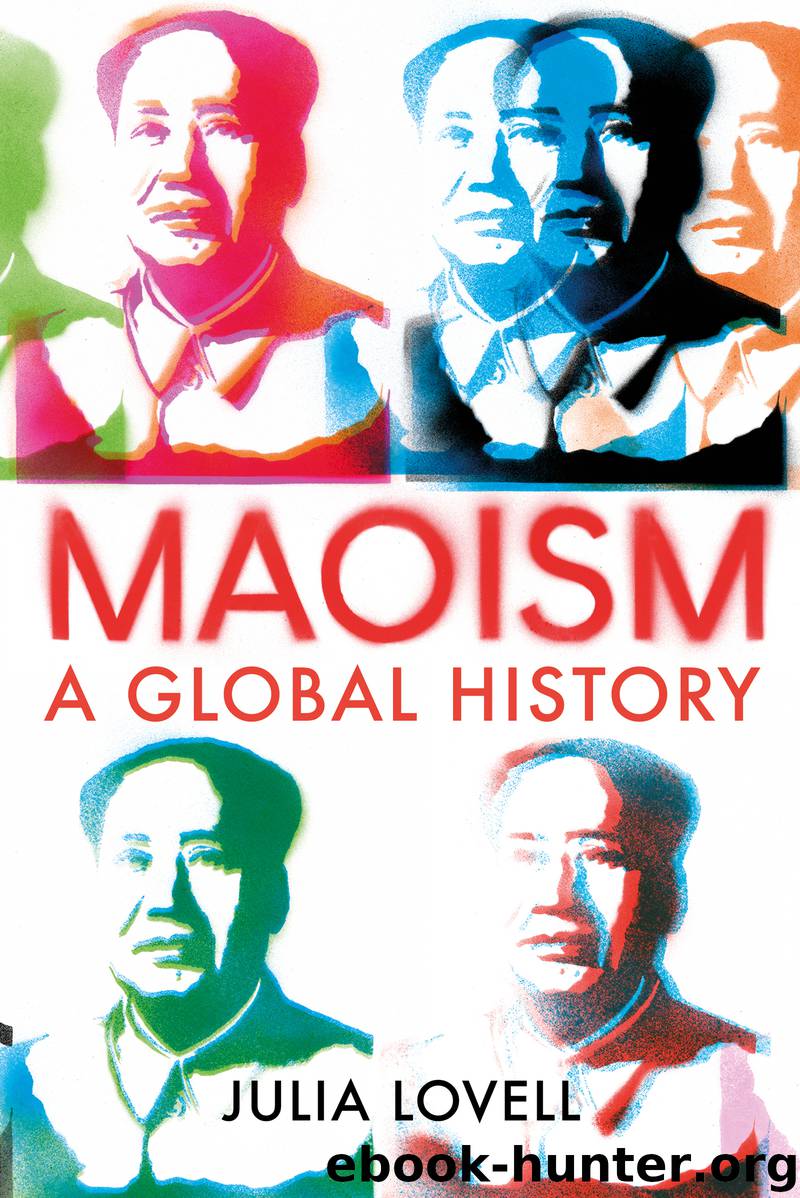
Author:Julia Lovell
Language: eng
Format: epub, azw3, mobi
ISBN: 9781448156313
Publisher: Random House
Conservative intellectuals – particularly those who have weighed into the ‘Culture Wars’ of the past two decades – like to claim that, over the past half-century, young left-wing radicals of the 1960s have successfully undertaken a ‘long march through the institutions’ (in Rudi Dutschke’s phrase), overrunning the establishment with politically correct values. It is true that the countercultural rebellion of which Maoism was a part decisively eroded social and cultural conservatism in the United States and Western Europe, and that the effects of this liberalisation are discernible in public life today.
Western Maoism fed into the women’s and gay liberation movements, into educational reform, and aspirations to racial equality in public life. Tout!, the journal of the more liberal wing of French Maoism (the group Vive la Révolution), hosted early explorations of women’s and gay rights issues. Feminists based their ‘consciousness-raising’ – railing at the discrimination they suffered from male classmates, teachers, boyfriends, husbands and colleagues – on the Chinese revolution’s ‘speak bitterness’ sessions. ‘There’s something else that we absorbed from the Chinese revolutionary experience that’s harder to put into words,’ mused Carol Hanisch, backbone of the radical feminist group Redstockings and populariser of the phrase ‘the personal is political’. ‘Call it inspiration … hope … the spirit of revolution.’106 Although there could be plenty of macho in American Maoism, too. In 1963, RAM called a ‘Black Vanguard Conference’: ‘a secret, all-black, all-male conference to draft strategy’.107
Mao-style criticism/self-criticism later blurred into the confessional habits of therapy and self-help. The Cultural Revolution-inspired dissent of the 1960s and 70s contributed to reforms of secondary and higher education, to make teaching methods and curricula more participatory, more representative, more accountable to diverse communities. African or Chinese American activists (such as John Bracey, at the University of Massachusetts from 1972), who stayed in the educational system rather than joining radical parties, contributed to the struggle for black and ethnic studies in universities.
Another connection can be drawn between Cultural Revolution-inspired rebellion and the sceptical enquiries of post-structuralism – Michel Foucault went through a Maoist phase in the early 1970s, which led, among other things, to necessary and searing indictments of the French prison system.108 Paradoxically, the idealised vision that French intellectuals had of the Cultural Revolution – the totalitarian apogee of Mao’s own power projection – as a moment of rebellious mass democracy segued into a concern with ‘human rights’ and support for humanitarian organisations such as Amnesty International.109 Maoism had a role to play too in the emergence of post-colonial and subaltern studies. India’s Naxalite Maoism led to South Asian intellectuals engaging with ‘subaltern’ experiences and consciousness; this perspective has reshaped approaches to writing history and culture in the West.110
Some former French Maoists have become cultural and political celebrities. Alain Geismar, former leader of the militant Gauche Prolétarienne, served through the 1990s in a succession of Socialist Party governments. Between 1973 and 2006, Serge July – another former GP leader – founded and edited Libération, a newspaper that originated from the organised Maoist left but evolved into an influential mainstream broadsheet.
Download
This site does not store any files on its server. We only index and link to content provided by other sites. Please contact the content providers to delete copyright contents if any and email us, we'll remove relevant links or contents immediately.
| Arms Control | Diplomacy |
| Security | Trades & Tariffs |
| Treaties | African |
| Asian | Australian & Oceanian |
| Canadian | Caribbean & Latin American |
| European | Middle Eastern |
| Russian & Former Soviet Union |
The Secret History by Donna Tartt(18973)
The Social Justice Warrior Handbook by Lisa De Pasquale(12172)
Thirteen Reasons Why by Jay Asher(8856)
This Is How You Lose Her by Junot Diaz(6845)
Weapons of Math Destruction by Cathy O'Neil(6229)
Zero to One by Peter Thiel(5743)
Beartown by Fredrik Backman(5691)
The Myth of the Strong Leader by Archie Brown(5474)
The Fire Next Time by James Baldwin(5398)
How Democracies Die by Steven Levitsky & Daniel Ziblatt(5183)
Promise Me, Dad by Joe Biden(5120)
Stone's Rules by Roger Stone(5060)
A Higher Loyalty: Truth, Lies, and Leadership by James Comey(4923)
100 Deadly Skills by Clint Emerson(4888)
Rise and Kill First by Ronen Bergman(4747)
Secrecy World by Jake Bernstein(4712)
The David Icke Guide to the Global Conspiracy (and how to end it) by David Icke(4664)
The Farm by Tom Rob Smith(4475)
The Doomsday Machine by Daniel Ellsberg(4463)
